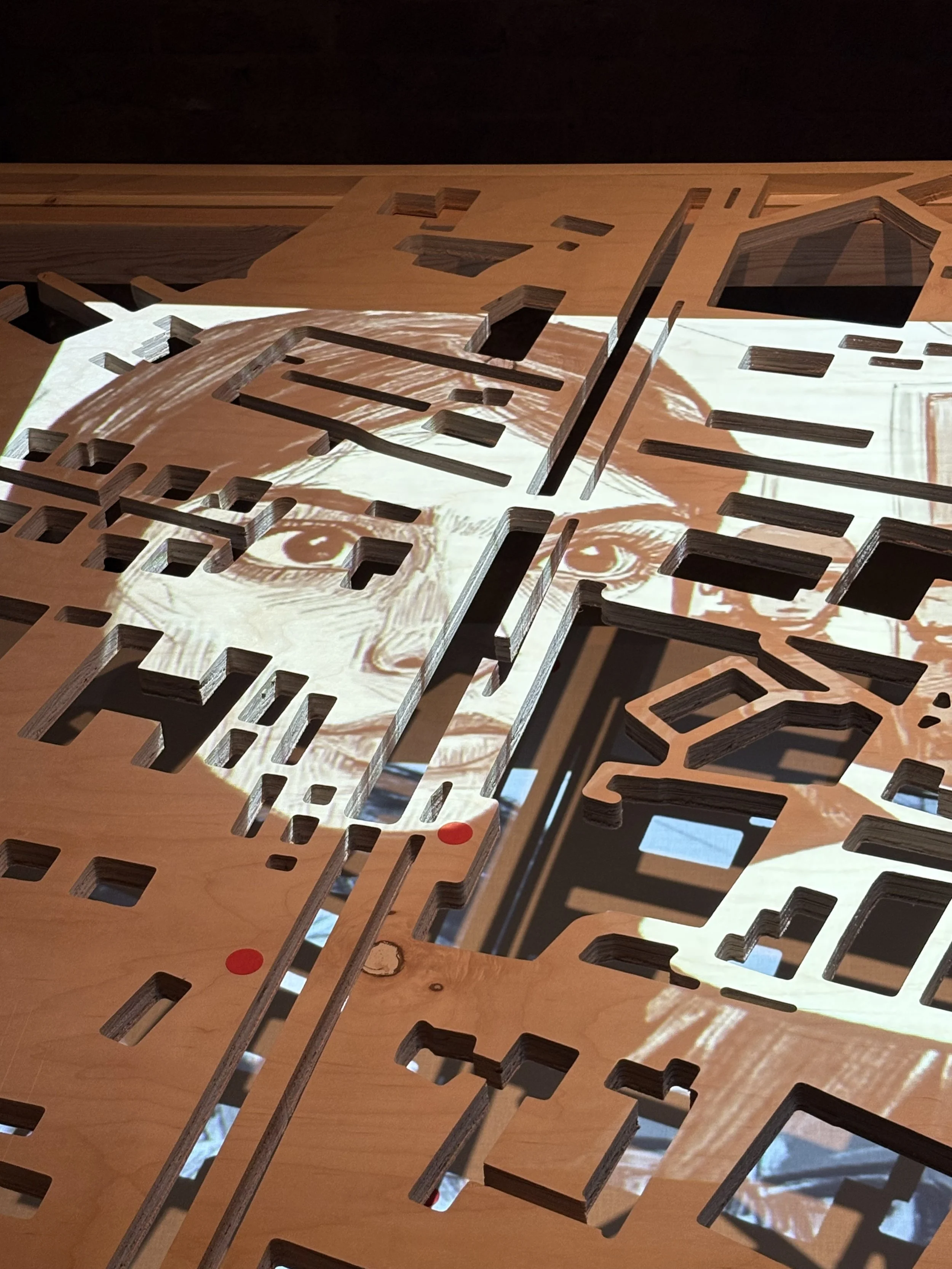
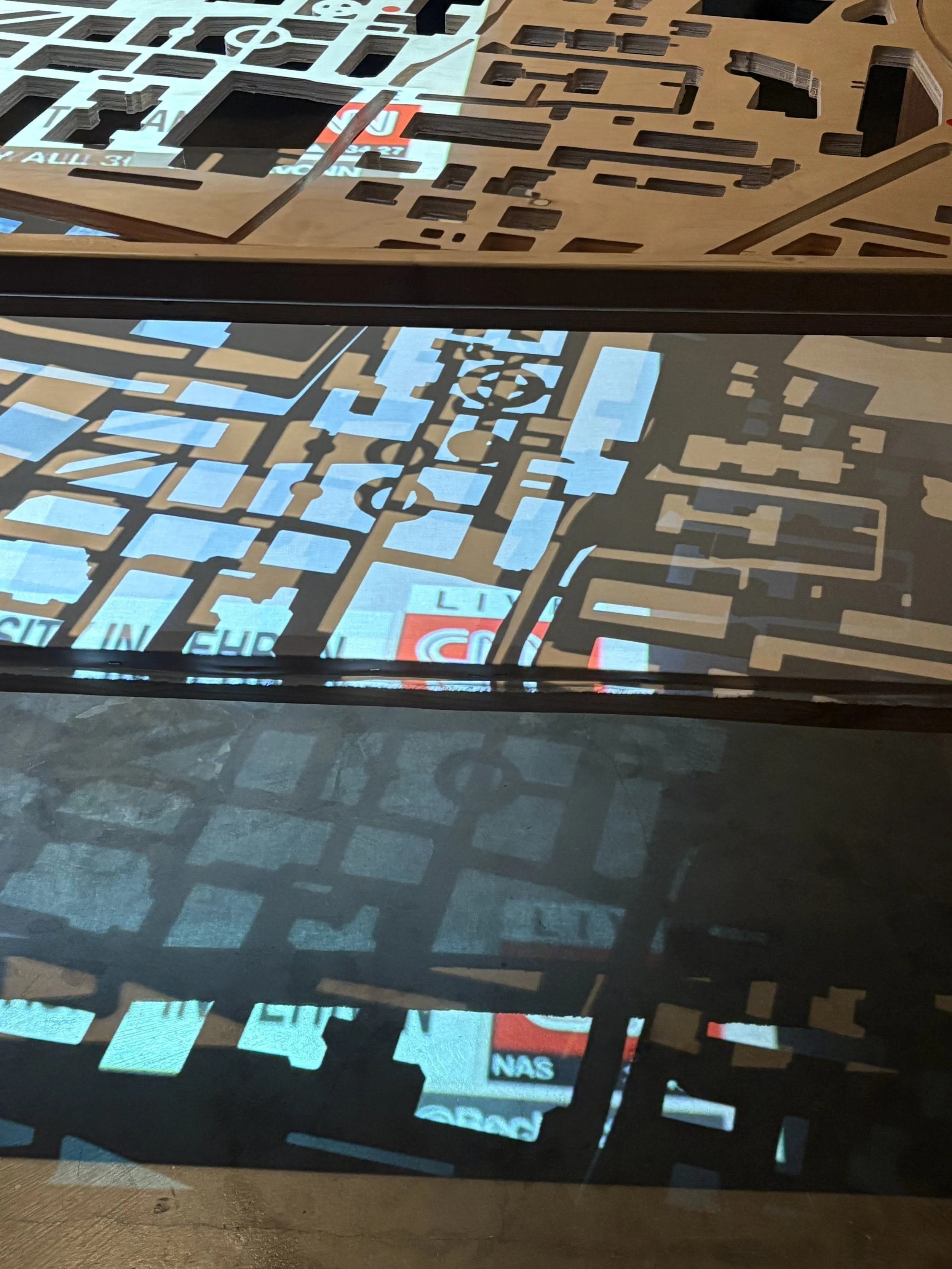
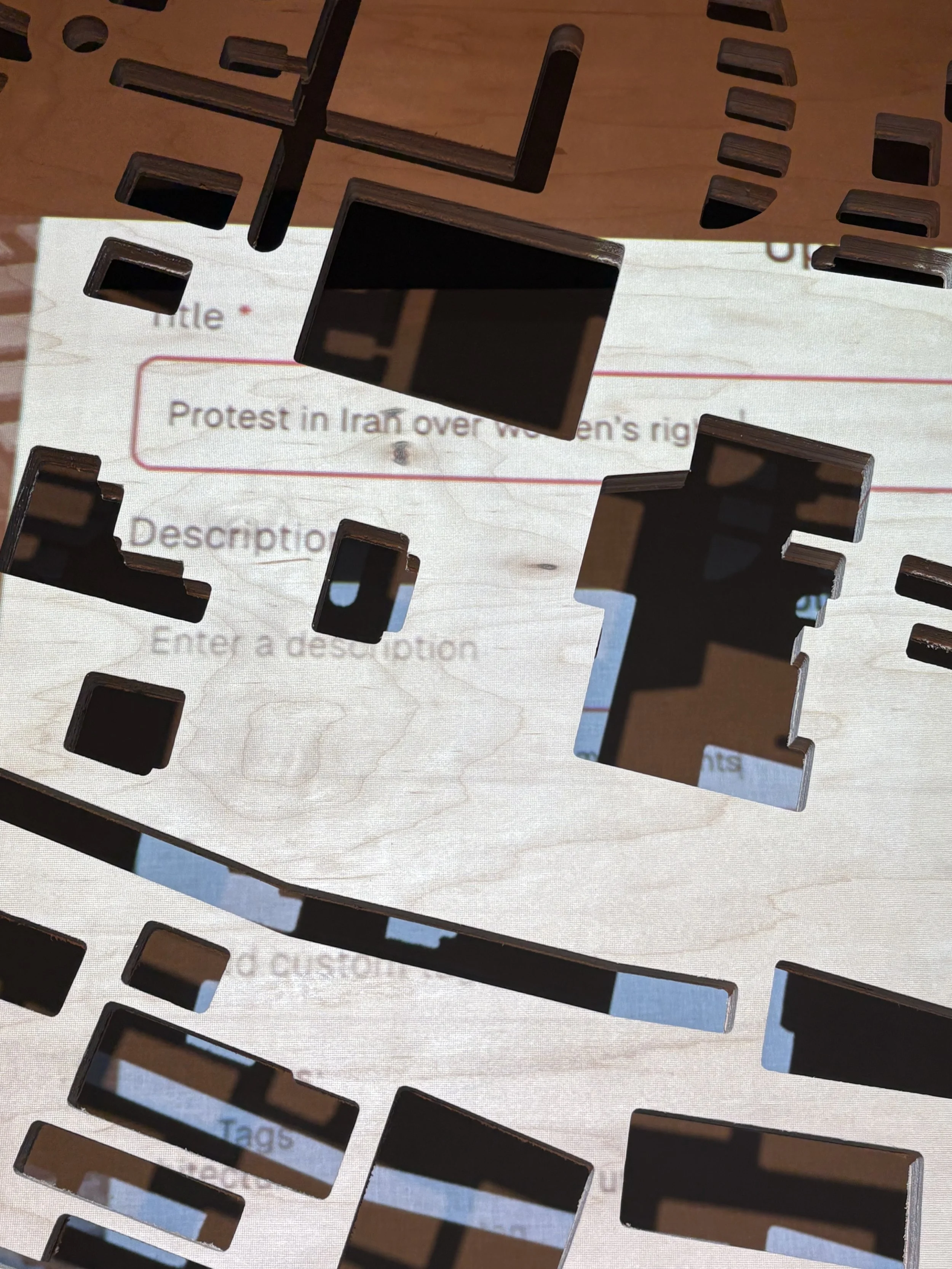
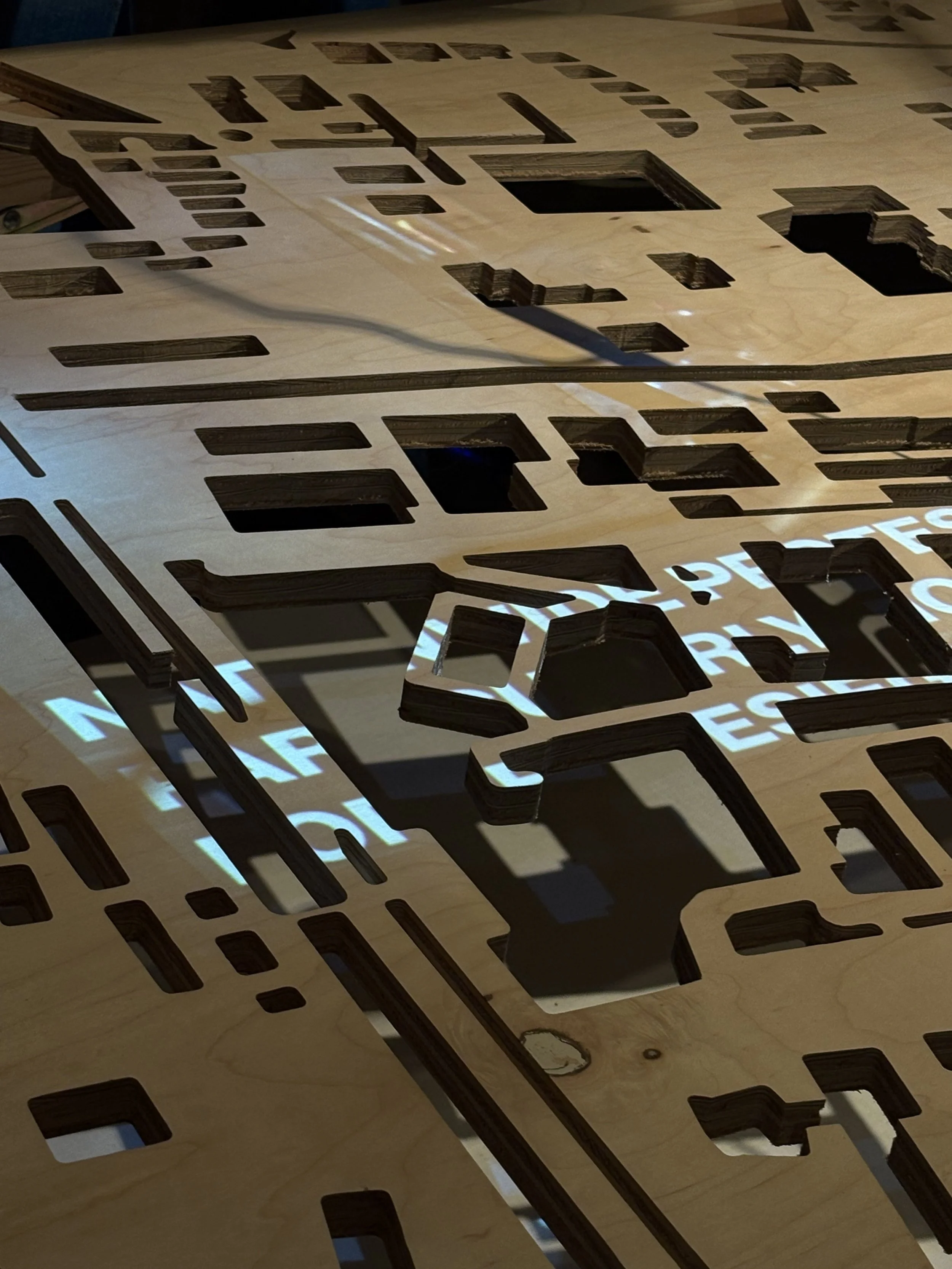
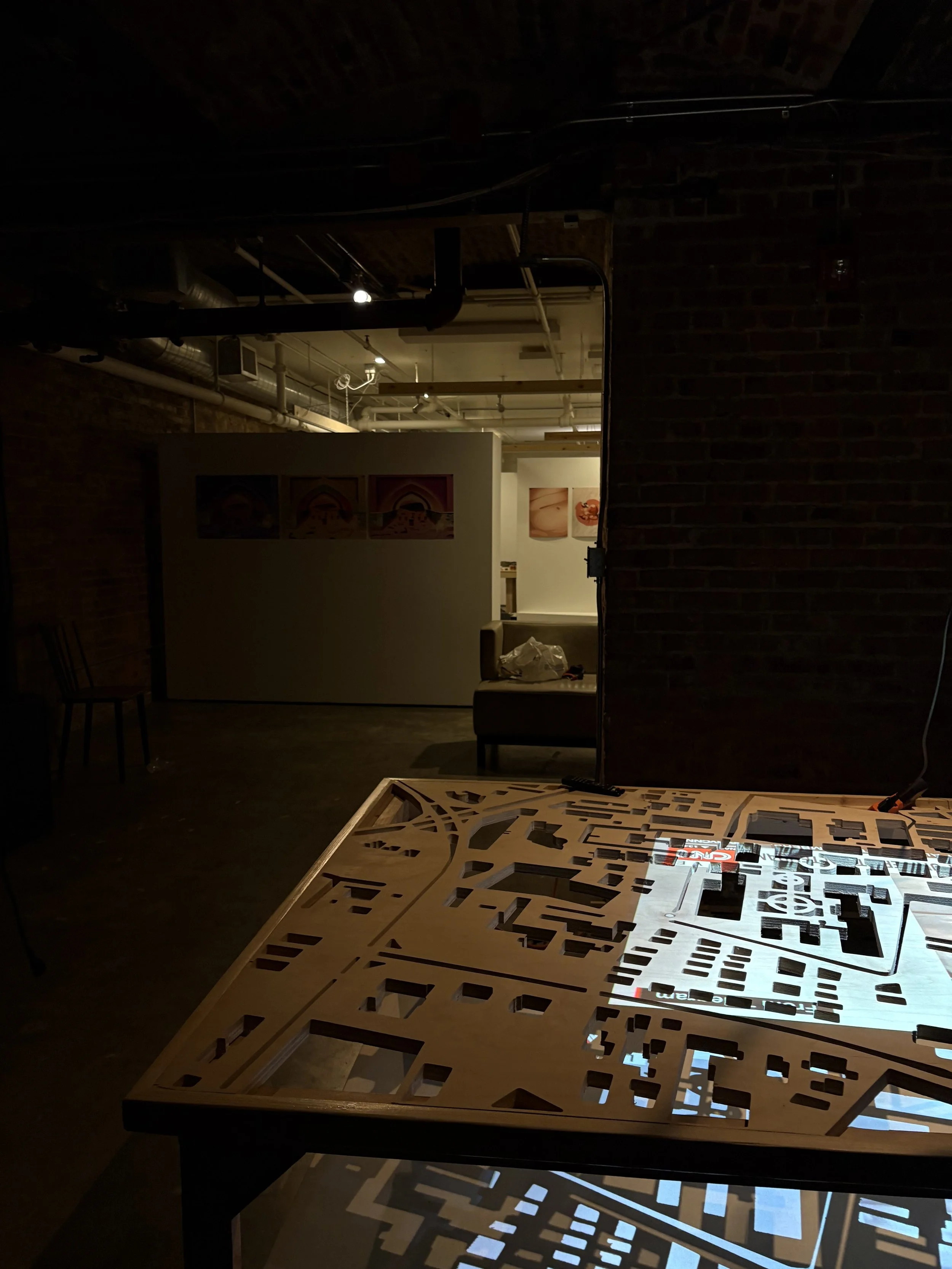
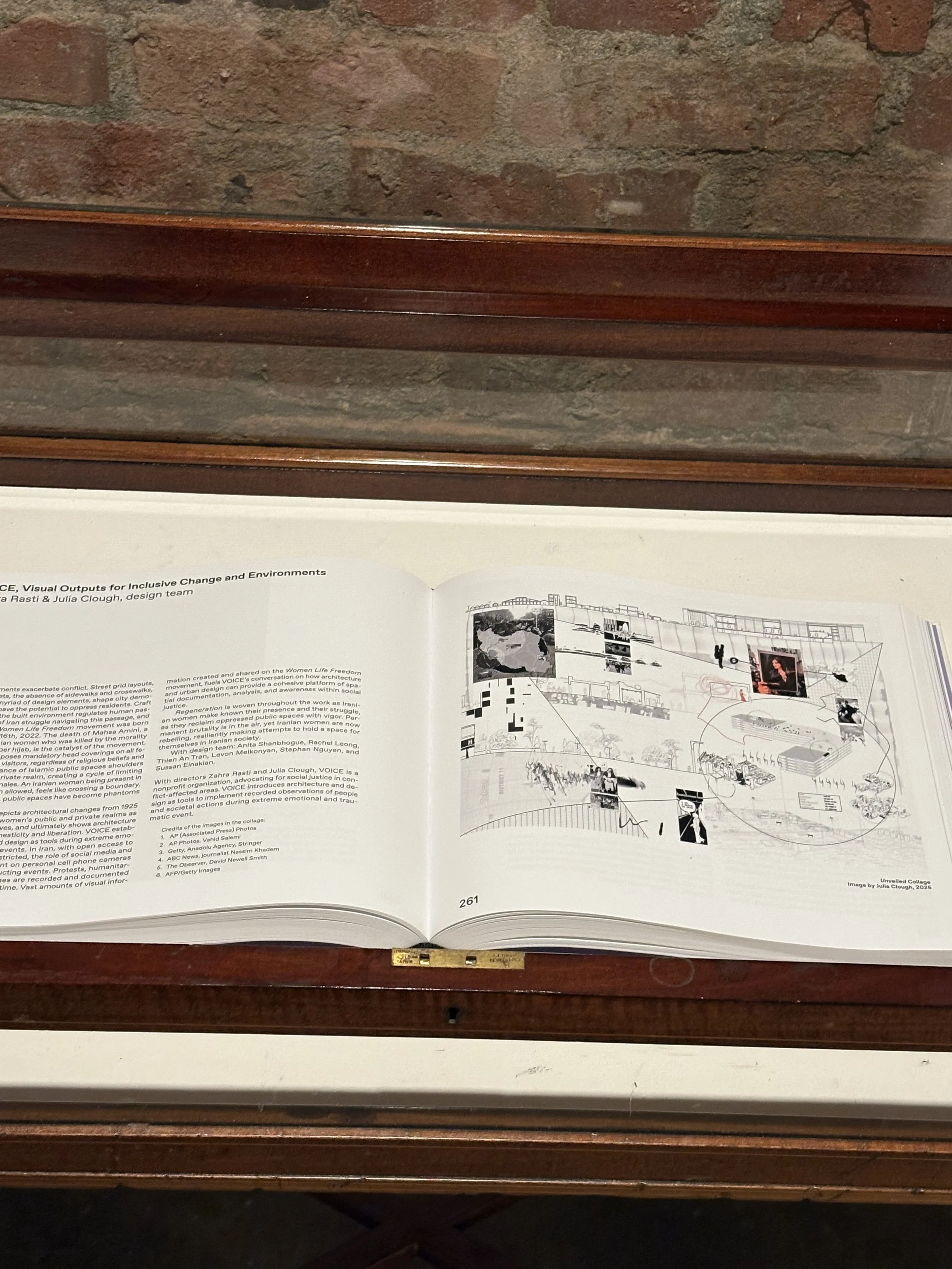
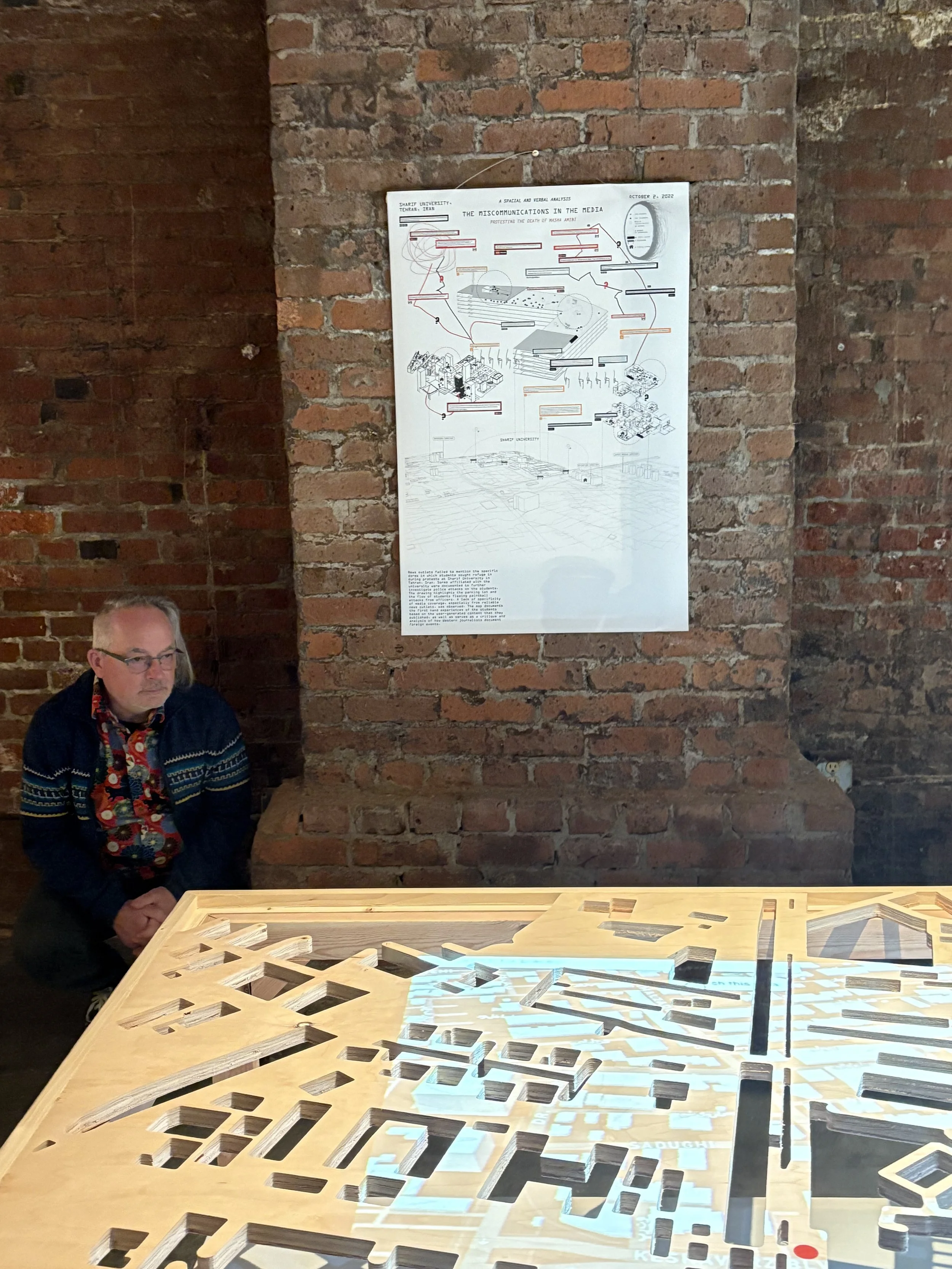
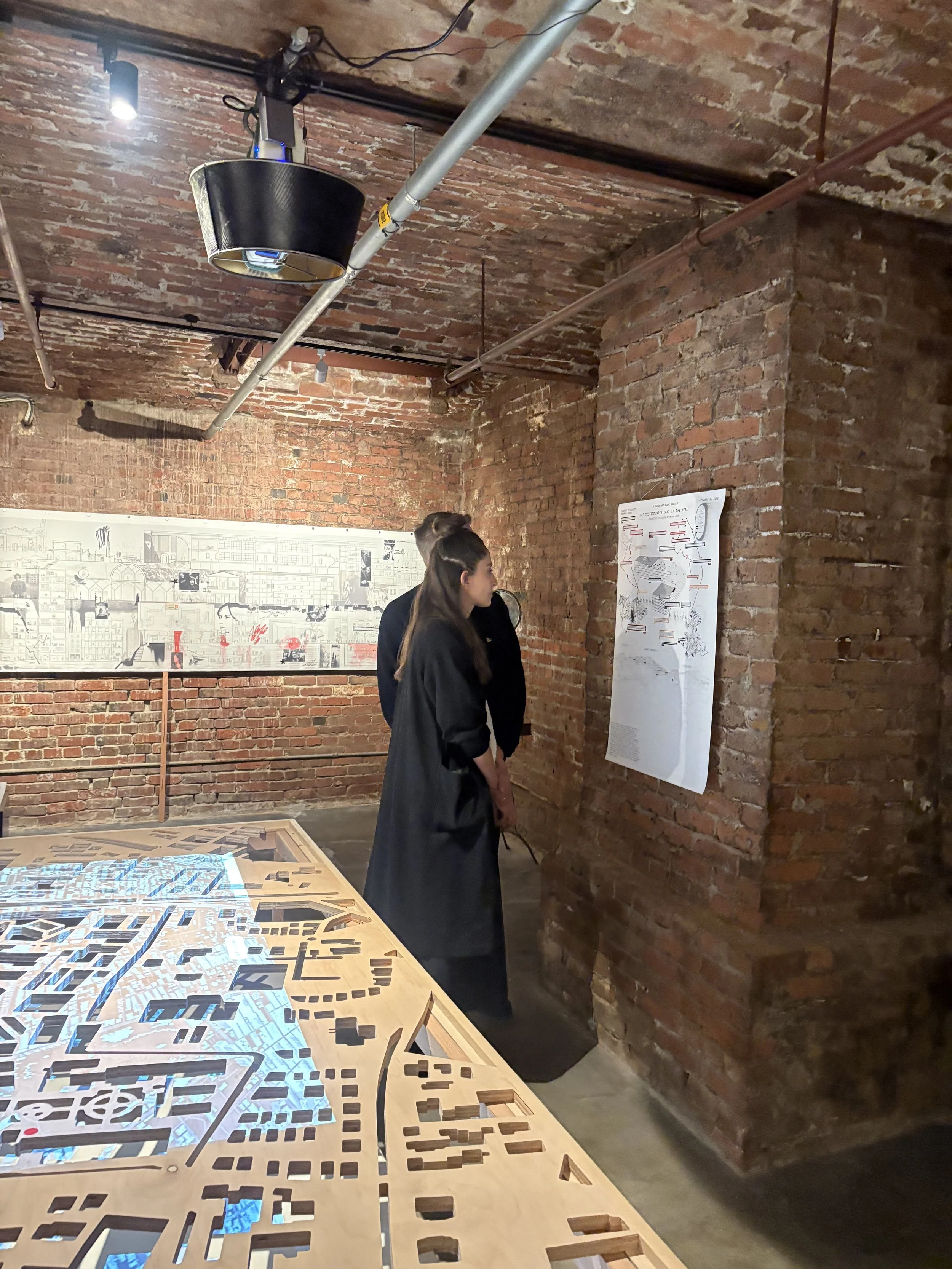
Mapping for Social Justice translates user-generated digital content (videos, images, and social media coverage of protests) into spatial knowledge. It examines how events unfold within the built environment and asks whether spatial approaches to documenting and visualizing protests can support lawyers, artists, and social activists in their processes of fact-finding, analysis, and advocacy. Central to this work is the role of public space as a site where power, resistance, and collective voice become visible.
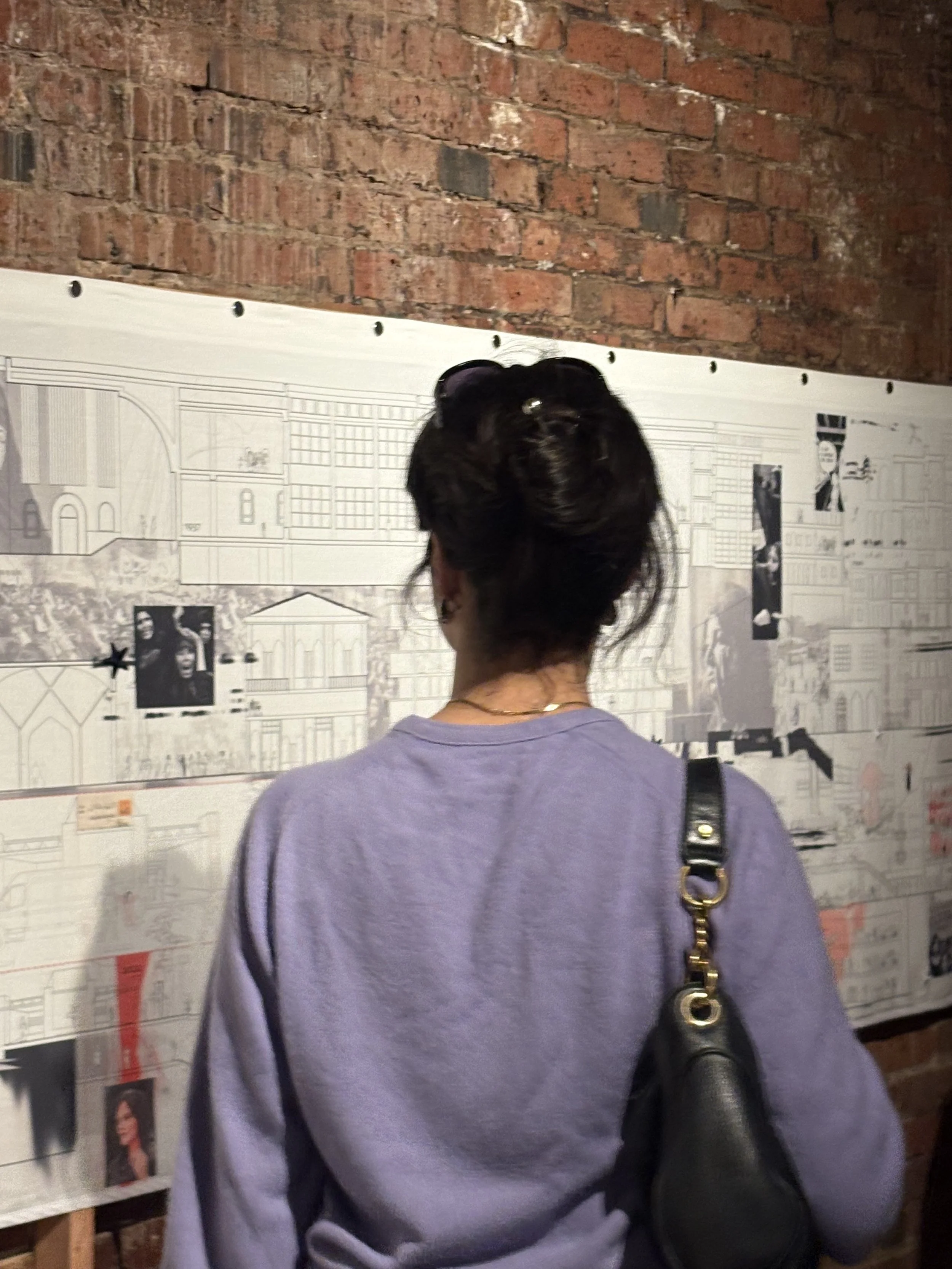
Building on this framework, the work presents a series of drawings and mappings developed through the Women, Life, Freedom movement. These works examine how protests occupy, transform, and are documented within the built environment. Through mapping, 3D modeling, and image analysis, fragmented visual data is reconstructed into spatial and temporal narratives, revealing how authority operates within public space, and how acts of resistance challenge and reconfigure it. Here, drawing becomes both an analytical method and a form of evidence, capturing the tension between control and expression in the urban realm.
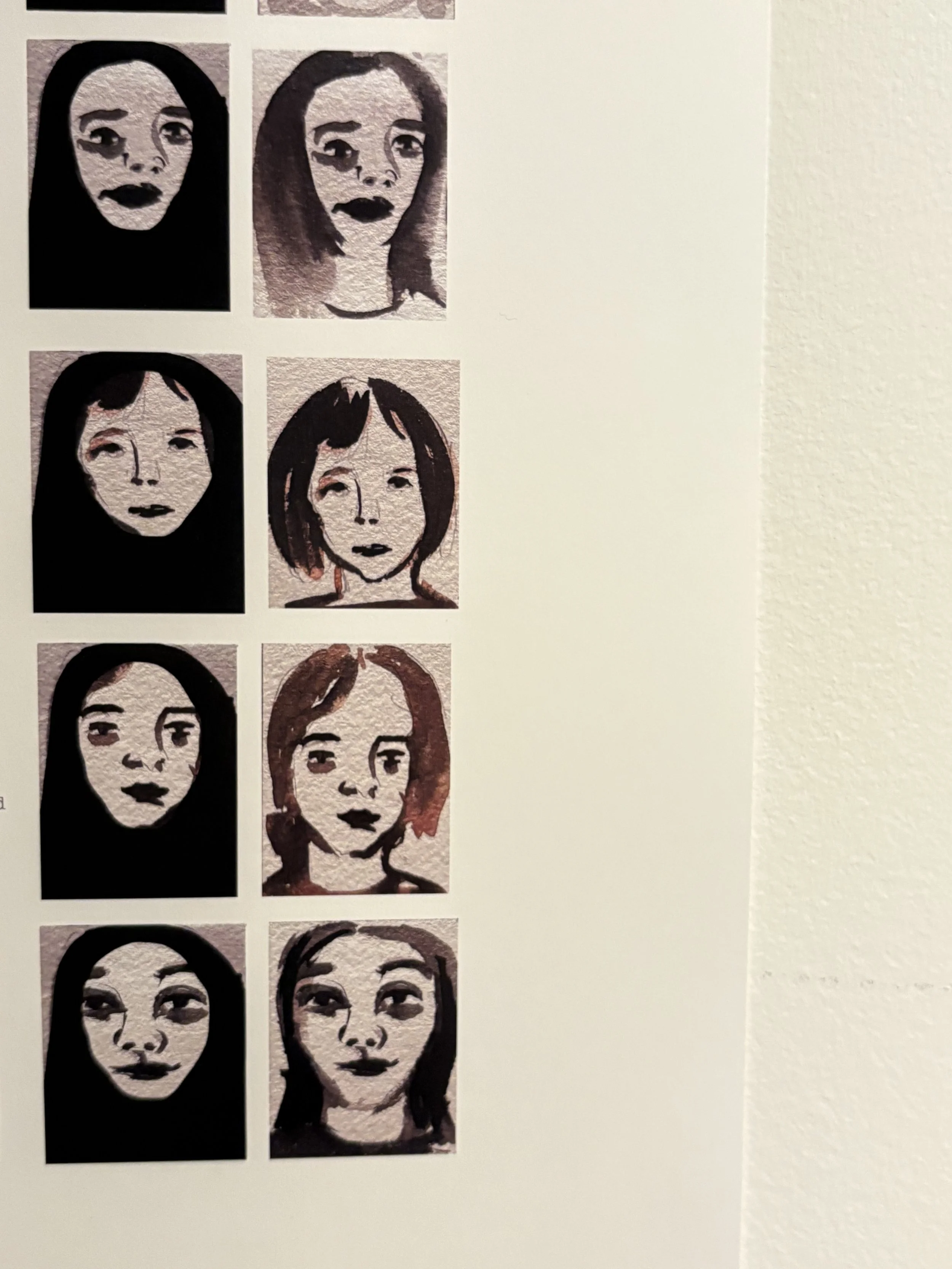
Passports of Identity presents paired passport images from Iranian women across two conditions: one taken under enforced regulations, and the other after obtaining new citizenship, where self-representation becomes possible. These images expose how authority inscribes itself onto both space and the body (operating through architecture in one instance, and through documentation in another) while also highlighting moments of agency, resistance, and self-definition.
Together, these two columns frame a continuum from public space to public document, revealing how structures of power shape both collective environments and individual identities, and how visual practices can challenge, document, and reframe these conditions.

Take a look at our recent EXHIBIT, crafted with care and designed to make an impact.